
 Injectors
 Turbos
 Fuel Pumps
 Oil Pumps
 Electronic Actuators
 EGR Coolers
 Accessory Kits
 Contamination Kits

Can Contaminated Fuel Damage Injectors? Yes. Leave a comment
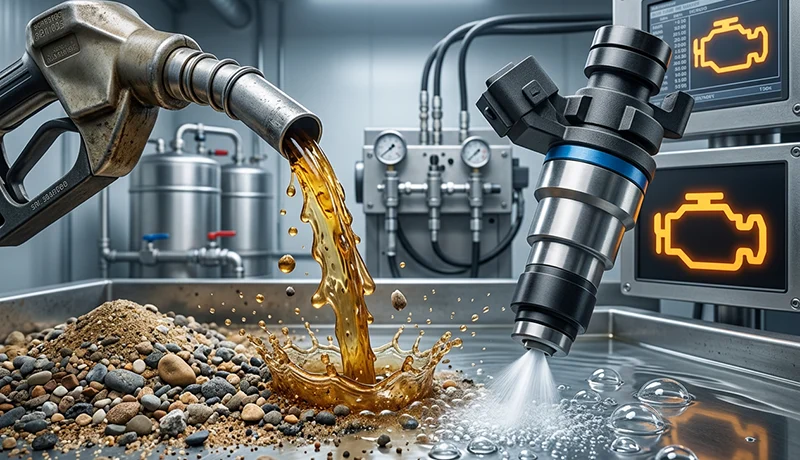
A common-rail injector> can be damaged long before a truck throws a hard fault code. The engine may still start, idle, and pull a load, but contaminated fuel is already wearing precision internal parts that operate under extreme pressure. So, can contaminated fuel damage injectors? Absolutely. In many diesel fuel system failures, contamination is the root cause, not the injector itself.
For a working truck, that distinction matters. Replacing one failed injector without finding and removing the contamination can turn a repair into a repeat failure – and can put the fuel pump, rails, lines, and the rest of the injector set at risk.
Can Contaminated Fuel Damage Injectors? Here Is How
Modern diesel injectors are built to extremely tight tolerances. Inside a common-rail injector, fuel passes through precision-machined control components and nozzle orifices while the system operates at pressures that can exceed 30,000 PSI. The injector needs clean, properly lubricating diesel fuel to meter and atomize fuel correctly.
Water, dirt, rust, microbial growth, and metal particles do not belong in that environment. Even contamination that is too small to see can score internal surfaces, restrict flow, or cause an injector control valve to stick. Once wear begins, the injector may overfuel, underfuel, leak internally, hang open, or fail to respond as commanded by the ECM.
The severity depends on what entered the system and how long the truck was operated. A small amount of water caught early may be limited to filter service and fuel cleanup. Metal from a failing high-pressure fuel pump is a different situation. Metal debris can travel through the entire high-pressure side of the system, making a complete contamination repair necessary.
Water strips lubricity and causes corrosion
Diesel fuel provides lubrication for fuel system components. Water does not. When water enters the system through poor fuel storage, condensation, a damaged fuel cap, or a bad fuel source, it reduces lubricity and promotes corrosion. Corrosion particles can then circulate through the fuel system.
Water can also damage injector electrical connections and contribute to microbial growth in tanks. In cold conditions, free water may freeze and restrict fuel flow. A water-in-fuel warning should be treated as a service issue, not a light to ignore until the next oil change.
Dirt and rust score precision components
A neglected fuel filter, contaminated transfer container, deteriorating fuel tank, or debris introduced during repair can send abrasive particles toward the injectors. Diesel injector nozzles and control valves are not designed to tolerate grit. Fine particles can damage the nozzle needle and seat, alter spray pattern, and create excessive internal leakage.
Poor atomization is more than an efficiency problem. It can increase smoke, raise exhaust temperatures, contribute to piston damage, and load up emissions components. On trucks equipped with EGR and aftertreatment systems, poor fueling can create a chain of expensive problems beyond the injector itself.
Metal contamination signals a larger fuel system failure
Metal in a fuel filter or fuel sample is a major warning sign, especially on high-pressure common-rail systems. It often points to a failing high-pressure fuel pump. Once the pump begins shedding material, those particles can move through fuel lines, rails, pressure relief components, and injectors.
Installing replacement injectors into a metal-contaminated system is not a repair. It is a setup for damaging the new parts. The correct repair may require replacing the failed pump, injectors, rails, lines, filters, and related components, then cleaning or replacing the tank and low-pressure supply side as required for the engine platform.
Symptoms of Injector Damage From Bad Diesel Fuel
Contaminated-fuel damage does not always produce one clear symptom. A truck may have a combination of drivability complaints, fuel pressure codes, and injector balance-rate concerns. Watch for these conditions:
- Hard starting, extended cranking, rough idle, or a no-start condition.
- Misfires, a noticeable knock, surging, loss of power, or poor throttle response.
- White, gray, or black exhaust smoke that was not present before the fuel issue.
- Reduced fuel economy, increased regeneration frequency, or rising exhaust temperatures.
- Water-in-fuel warnings, restricted-fuel-filter warnings, low rail pressure codes, or injector circuit and contribution codes.
These signs do not prove the injectors are bad. Air leaks on the supply side, a restricted filter, a weak lift pump, wiring problems, compression issues, or a failing high-pressure pump can create similar complaints. Good diagnostics matter because replacing injectors based on symptoms alone can waste time and money.
Diagnose the Fuel System Before Ordering Injectors
Start with the basics. Inspect the drained fuel filter for water, unusual dark material, rust, and metallic debris. If possible, capture a fuel sample in a clean, clear container and let it settle. Layering, visible water, sediment, or an unusual odor can provide useful clues.
Then check the fuel supply side. Look for damaged filler caps, cracked pickup tubes, loose fittings, leaking seals, contaminated auxiliary tanks, and fuel filters that are overdue for service. A fuel restriction or air intrusion issue can mimic injector failure by preventing the high-pressure pump from receiving a steady supply of clean fuel.
Use the proper diagnostic equipment for the engine. Review rail pressure desired versus actual, injector balance or correction values where available, return-flow results, and active or stored fault codes. On electronically controlled injectors, verify connector condition and harness integrity before condemning the injector.
If metal is found, stop running the engine until the source and repair scope are confirmed. Continuing to crank or operate a contaminated system can spread debris farther. For Cummins, Power Stroke, Duramax, Detroit, Paccar, Caterpillar, and International and other diesel platforms, the exact contamination procedure varies by system design. The principle does not: clean fuel components must not be installed downstream of an uncorrected contamination source.
The Right Repair Depends on the Contamination
For water or light sediment caught early, the repair may involve draining the tank, cleaning the supply side, replacing filters, correcting the entry point, and verifying fuel quality before the truck returns to service. If injector testing confirms a failed injector, replace it with a correctly matched unit and follow the manufacturer’s installation procedure.
For severe contamination, a partial repair is usually false economy. Replacing only the visibly failed component leaves contaminated fuel and debris in the system. That can destroy replacement injectors quickly and create warranty issues because the underlying cause was not corrected.
When injectors are replaced, use clean caps, fittings, tools, and work surfaces. Do not leave open fuel lines exposed to shop dust. Replace required sealing washers, O-rings, high-pressure lines, and hold-down hardware according to the engine manufacturer’s instructions. Some systems require injector trim codes or calibration data to be entered with a scan tool after installation. Skipping that step can affect idle quality, fueling accuracy, and diagnostics.
A quality remanufactured injector should be thoroughly tested and matched to the proper application. At American Diesel Parts, remanufactured injectors are tested and programmed where applicable, giving repair shops and truck owners a dependable option when the fuel system has been properly cleaned and repaired.
Prevent Another Contaminated Fuel Failure
Fuel handling discipline prevents many injector failures. Buy diesel from suppliers with reliable fuel turnover, keep bulk storage tanks maintained, and use clean dedicated containers. Store fuel properly and keep filler caps sealed. On equipment that sits for extended periods, inspect for water and microbial contamination before putting it back into heavy service.
Change fuel filters on schedule, but adjust the interval when operating in dusty environments, using questionable fuel sources, or working through seasonal temperature swings. Drain water separators regularly if the truck is equipped with one. A filter is inexpensive protection, but it cannot correct a tank full of water, algae, or metal.
Before installing a new injector, confirm why the old one failed. That one diagnostic decision protects the new part, the customer’s uptime, and the entire diesel fuel system.
